
Memory Against Authoritarianism
By Cayden Mak
In Yoko Ogawa’s 1994 novel The Memory Police (which appeared in English for the first time in 2019), a novelist and her editor struggle against a creeping forgetting enacted by the state. It begins with forgetting objects and expands to include concepts (like seasons) and even people. The characters struggle against the grim cascade of losses, culminating in the author vanishing, but not before she tells her editor that he may yet be able to come out of hiding, along with those who survived with at least some memories intact.
It’s a haunting book. I read it during the early pandemic lockdown in 2020. I have an intense memory of being absorbed in the book while it felt like the world was disappearing around me. As we struggled to contend with a once-in-a-century global public health crisis, the rapid mutation of far-right conspiracy theory, and the electoral struggle to unseat Donald Trump, I couldn’t help thinking about the importance of memory as a political process.
Like what you're reading? Subscribe to The Revival Letter and you'll be the first to see it each time we publish, directly in your inbox!
The truth is, my peers and I have long been nervous about the relationship between memory, politics, and technology: I don’t think it’s a coincidence that more than one of my friends from high school became archivists. We were freshmen when 9/11 happened, and our teenage political consciousness blossomed during the height of the anti-war movement. We were a part of spinning Web 2.0 into an ever-tightening loop of user behavior and surveillance, alienating us from the products of our leisure while exerting greater and greater control from both corporations and the government. And that tightening loop accelerated our media environment, making it feel nearly impossible to process, let alone remember and make coherent narratives about, the history we were living through.
And at the end of the day, we do live in the United States — a country addicted to forgetting, or perhaps mis-remembering, its own past. It makes so much sense that it did happen here.
Movement Media as Memory Work
When I assumed the role of Publisher at Convergence in 2023, I wasn’t thinking about The Memory Police. But I was thinking about movement memory and what we need today in the struggle against authoritarianism. Memory work for and by social movements — memory work from below — is vital to how we understand strategy and tactics. More than just a matter of avoiding making the same mistakes twice, it’s part of how new ideas get developed and tested. It’s sort of a scientific method of democratic participation, if you will, where we can show one another the results of our experiments and hypothesize about what comes next.
It may come as no surprise to you that I’ve been thinking a lot about how the attention economy is designed to flatten our memory, burn it out, and keep us from taking the time to linger over ideas in ways that reveal something deeper. The rapid exchange of tiny bites of information, even before the rise of synthetically generated content, led to a paradoxical popularization of movement figures, moments, and symbols from the past while simultaneously decontextualizing them and closing the door on nuanced reflection. All this forced acceleration has been pretty bad for us on balance, psychologically as well as sociologically, and the economic incentives that promote it also provide a sturdy barrier to dismantling it.
Dismantling the attention economy — and building a better internet for democracy — is exactly what I came to Convergence to do.
What is Convergence?
Convergence is a movement media publication focused on organizing strategy to block authoritarianism and build the power, influence, and capability of our movements to win. We publish articles written by organizers themselves, reflecting on the strategies, practices, and skills that we need to defeat authoritarianism. I also host Block & Build, our weekly podcast, where I get to dive even deeper into some of those same big topics. In many crucial moments in recent history, we’ve published pieces that have felt deeply prescient — not because our writers see the future, but because we’re astute observers of our current conditions and the way that power works.
Convergence Magazine is an independent journal of organizing, dedicated to bringing our movements together to strategize and win multi-racial democracy in the United States.
Our work, and the work of all journalists in this time, must be to help people orient themselves in a fundamentally disorienting media landscape. Internally, we talk about ourselves as “slow media,” because one of the best things we can do to change our relationship to the attention economy is to slow the entire fuck down.
Part of how and why we do that is deeper than my personal leadership and vision at Convergence. It’s actually built into our DNA as an organization.
Convergence was started in 2009 as a side project by three movement strategists, two of whom are my personal comrades. Then called Organizing Upgrade, the coeditors published writing and interviews with organizers they respected. Contributors grappled with the impacts of Barack Obama’s first Presidential victory and how that did — and did not — change the conditions for organizers on the ground. They examined the fallout of the 2008 financial crisis and the bank bailout. They were there for the emergence of Occupy Wall Street and contended with its legacy. All of these ideas and the questions about them are contained in our archive.
After some years of dormancy, OrgUp was revived by a different, but related, group of movement strategists and communicators. They were worried about the rise of the “Make America Great Again” movement as a driving force in right-wing politics, and what it portended for our democracy. That group still forms the core of our volunteer editorial board. Two members, Max Elbaum and Marcy Rein, have been a part of social movements since the late ’60s. Their shared memory is even longer than that of the publication, and building an intergenerational space for remembering, interpreting, and deliberating was part of what drew me to Convergence.
The continuity between OrgUp and Convergence is about political vision. The question at the core of our work has always been a practical assessment of power. What does it take to win, not just an election or a campaign, but the battle for our goals as a society? That kind of winning allows us to make the world over to be fairer, freer, and more just, as a matter of process.
This all adds up to something pretty unique: Our current pursuit of new insight and our archive contain strategic reflection and rigorous examination of the political, social, and cultural conditions that movements for justice and liberation in the U.S. have contended with for the past 17 years. Being the steward of that archive is a profound honor, and in a time of both structural and political forgetting, it is also timely.
Hope in the Dark
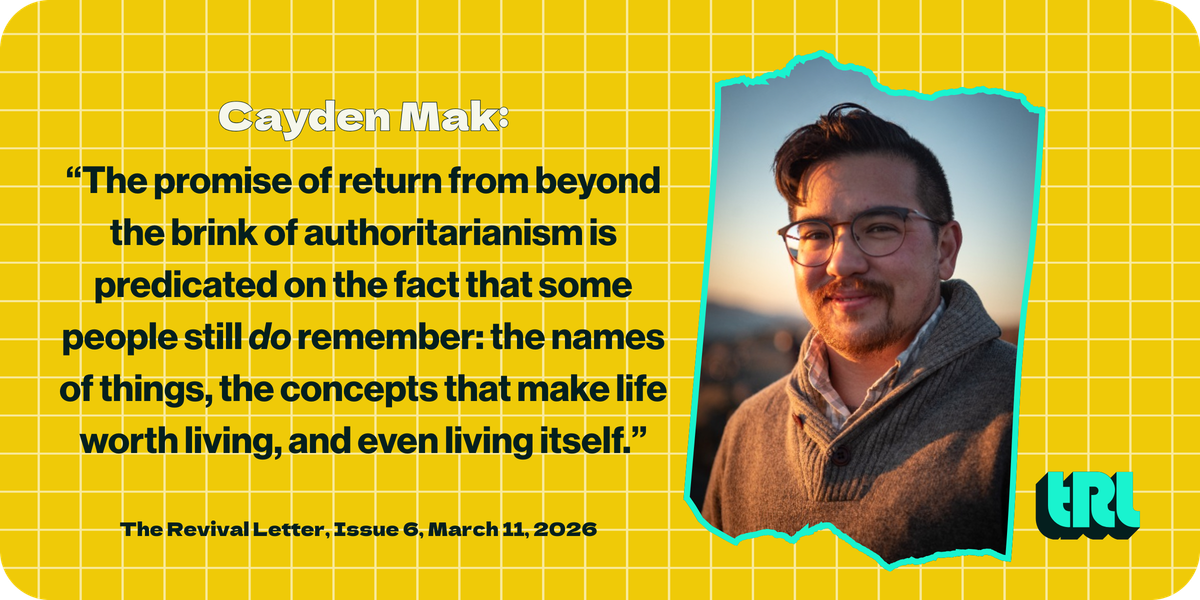
The end of The Memory Police isn’t exactly hopeful. But what seems like an overwhelming victory by the rulers of memory has some fundamental flaws. The promise of return from beyond the brink of authoritarianism is predicated on the fact that some people still do remember: the names of things, the concepts that make life worth living, and even living itself.
Our time is also one of enforced forgetting as a tool of authoritarian consolidation. It is enacted every day through an increasingly small, oligarchic media ownership class; the flourishing of attention economy-driven conspiracism; and the straight-up lies being repeated by the government and its proxies. The truth is also that the conditions we see clearly in the light of day today have been brewing for decades — and one of the crucial insights that this forgetting has obscured, for many people, is that we are stronger together than we are alone.
This is an essential democratic principle. I don’t mean democracy in the sense of casting a ballot once every other year. I’m thinking of a much more vital question: how shall we make decisions about how to live together, knowing we cannot return to the past, but must embrace an uncertain future? The promise of democracy is that everyday people, not only those who have amassed wealth or a monopoly on violence, get to self-organize towards a more just and inclusive way of making those decisions. The hope is that by doing so, we can nurture growth, reduce suffering, and maybe — maybe — find justice for past wrongs.
As part of my work as Publisher, I’ve been digging into the Convergence archive from 2009 onward. Many of these pieces are in a bit of disarray. They require aesthetic updates to improve accessibility, and human editorial attention to enhance readability. So lately I’ve been immersed in reflections from the not-so-distant past.
The first of these articles we got back online with a new illustration is this one. Willie Baptist’s insights, from decades of organizing poor people, are incisive and challenging; he talks about what we’ve gotten right, but also where we’ve gone wrong. Revisiting this piece at the same time that we’re publishing articles like this one, which stakes out a bold hypothesis about turning campaigns to block AI data centers into bigger power-building plays, brings into sharp focus his invocation: “You’ve got to talk as you walk. You’ve got to teach as you fight. You’ve got to learn as you lead.”
My lesson from the archive is that what we face now is not entirely novel, but part of a continuous arc of history, shaped by people, that is open for contestation. Much of what we published over a decade and a half ago feels like it could’ve been written six months ago. This is not to say that conditions haven’t changed, but rather that many of the most incisive thinkers on the Left have had a consistent analysis of our conditions, but something has stood in the way of our capacity to change them.
Diagnosing that problem requires a much longer reflection. But revisiting these conversations and writings has done more to shore up my faith in people than you can imagine. Instead of feeling hopeless, I’m finding myself more certain that we have the tools we need to win. After all, the work of remembering is not just about remembering for its own sake. Our remembering must be a part of a sophisticated political practice that encourages the exploration of ideas and experimentation (including learning from failure). And I keep seeing examples where people are, consciously or otherwise, revisiting and updating the theories and practices of the past. It’s what’s there, in the archive, a living reminder of our place in the long arc.
Tending to our shared memory, adding to it, and bringing it into conversation with the present, is a task our team is proud to shoulder. It is a vital first step to take so that we, too, can return from beyond the brink.
###
Cayden Mak is the publisher at Convergence and the host of Block & Build: Roadmaps for the Left. He is a cofounder and coordinator of the Movement Media Alliance.

Selected by Eesha Ramanujam
The Revival Lab envisions digital spaces as extensions of the connections we build in real life, rather than as poor substitutions. We hope you see this recurring segment as us rummaging through the shelves under the TV or leafing through a CD case to hand you what we’re watching or listening to.
This issue’s Cabinet selection is in the spirit of collective memory-keeping, with two movies that portray the importance and loss inherent to archiving in very different ways. Tune into the Oscars this weekend to see if the second selection, nominated for several awards, wins even further recognition!
- Recorder: The Marion Stokes Project (2019) is a documentary about the remarkable Ms. Stokes, who recorded television 24 hours a day across multiple channels for over thirty years, beginning in 1979 with news coverage of the Iranian hostage crisis. Her story, compelling and complicated on its own merits, is intertwined with that of the 24-hour news cycle, evolution in communication technology, anti-Communist persecution, radical library practices, the civil rights movement, and feminism.
- The Secret Agent (2025) is a Brazilian political thriller film primarily set in the 1970s, featuring Wagner Moura as a dissident evading capture (or worse) at the hands of an oppressive military dictatorship. The movie, written and directed by Kleber Mendonça Filho, follows the journey of not only Moura’s Armando, but the spectrum of people (played by a remarkable supporting ensemble) participating in or targeted by the regime’s violence and surveillance. Without spoiling anything, it is safe to say the importance of archiving, record-keeping, and the humanities is a central thread to the story. As a bonus, check out this excellent reflection by Daniella Mazzio for RogerEbert.com: “Who Will Remember You?: “The Secret Agent” and the Humanities as Resistance”

This recurring section is designed to highlight some of the best critical work coming from a new generation of creators on YouTube fighting back against corruption and fascism. Left and progressive content creators, many of whom are young men, are speaking up and acting out in a popular front against the redpill manosphere, MAGA propaganda spox, and white nationalist trolls. Each issue, we’ll recommend an independent journalist or news influencer to follow to enhance your YouTube recommendations, and help signal-boost some of the best creatives who are speaking truth to power.
Olurinatti: The Global War on Black Power
Abolitionist lawyer and YouTuber Olayemi Olurin is one to watch. She might have come across your timeline for her absolutely devastating takedown of then-NYC Mayor Eric Adams on The Breakfast Club back in 2024. When she’s not dogwalking corrupt politicians, Olurin runs the gamut of legal critique, pop culture deep dives, and political education content, and brings a decidedly Pan-African vibe with Marxist tendencies to all her excellent material. In this video, Olurin takes viewers on a tour of forgotten Black revolutionaries across the diaspora, from Haiti to the Congo to Chicago, making the case that their stories were never lost by accident. Give Olay a follow to Sage Your Algorithm.
Brian Friedberg is a Project Advisor with The Revival Lab and a Senior Researcher at the Shorenstein Center on Media, Politics, and Public Policy at Harvard Kennedy School, a graduate student in Social Anthropology at Harvard University, and the coauthor of Meme Wars (2022).

- Lost Recipes — Abe Beame, Defector, March 5, 2026
This sweeping narrative takes you back to the glory days of rap magazines, what is being done to preserve hip hop’s history, and how the internet has changed how we’re able to remember the past. (Defector is an employee-owned sports and culture website. Subscribe to Defector) … Recommended by David
- On the Levee — Katie Carter King, Gravy (journal), Southern Foodways Alliance, February 6, 2026
This piece tells the history of the 1950s sugar worker strikes in Louisiana, drawing out the specific racial dynamics and labor organizing efforts in one particular local context of a globally fraught industry. (Gravy is a project of the Southern Foodways Alliance, which explores the diverse food cultures of the changing American South. Become an SFA Member.) … Recommended by Eesha
- All the Ways Big Tech Fuels ICE and CBP — Caroline Haskins, Wired, March 3, 2026
This piece summarizes the infrastructure contracts between Big Tech companies and the US’s immigration enforcement agencies, as well as ongoing negotiations or pushback from workers. Although some of these technologies tend to get less attention than higher-profile weapons contracts or glamorous new AI developments, these financial ties often reflect the most significant ongoing relationships between the private sector and the state… Recommended by Eesha
- Organizing Gamers from the Bottom Up — Joseph Grover and Otis East, Convergence, February 17, 2026
Yesterday was Mario Day (Mar10) so this piece is extra timely. For at least the last decade, gamers have been exploited by corporations and isolated by ideological warfare. Learn about how The Players Alliance is organizing gamers across ideology to build consumer power in the face of corporate consolidation. (Convergence is a nonprofit collective magazine. Become a member of Convergence) … Recommended by David
- Prediction Marketing — Ayesha A. Siddiqi, Author’s Website, February 24, 2026
This fiery essay discusses the implications of a key new trend in financialization at the intersection of finance, technology, and breaking news. Siddiqi specifically outlines how “breathless coverage” has fueled further participation in this speculative market amidst political despair and economic downturns. (Ayesha Siddiqi’s Substack features “big picture long reads covering history and future from the perpetual present.” Subscribe here.) … Recommended by Eesha
- Why Are We Letting the Drug Warriors Win? — Logan Hullinger, Scalawag/Mobtown Redux, March 3, 2026
Baltimore’s “tough on crime” State’s Attorney will run unopposed this fall. This piece details how that will undermine efforts to help drug users in the city and provides a call to action for those working in harm reduction and criminal justice reform to provide voters with better options. (Scalawag is a nonprofit media outlet working to pursue a more liberated South. Donate to Scalawag) … Recommended by David
** Note from David: The author of the final piece in this list, Logan Hullinger, passed away suddenly this past weekend, four days before his 30th birthday. Hullinger founded and wrote for Mobtown Redux, covering harm reduction programs in Baltimore. With careful reporting and incredible respect for the dignity of his subjects, Hullinger was a great journalist. You can learn more about him and his work through this remembrance published by The Baltimore Beat.

- **TOMORROW**
Media Capture: Who Controls the Story Controls the Future
6 p.m. ET – March 12, 2026
Host: MediaJustice
Attend the launch event for MediaJustice’s new report, “Media Capture: Who Controls the Story Controls the Future.” The discussion will break down how tech oligarchs are capturing America's media system, who’s driving it, and why it matters for our communities. REGISTER HERE
- Bad Internet Bills
Creator: Fight for the Future
This online resource from Fight for the Future gives visitors an easy way to take action to oppose several dangerous bills before Congress that would give the administration more power over censorship and surveillance.
- Take Back Tech III
April 17-19, 2026
Atlanta, Georgia
Sponsors: MediaJustice and Mijente
Join a bunch of organizers, artists, tech workers, academics, lawyers, and more to rally and strategize our next power-building moves. The Revival Lab will be there. Will you? REGISTER FOR TAKE BACK TECH