
The Inconvenient, the Useful, and the Ephemeral: A Visit to the Prelinger Library
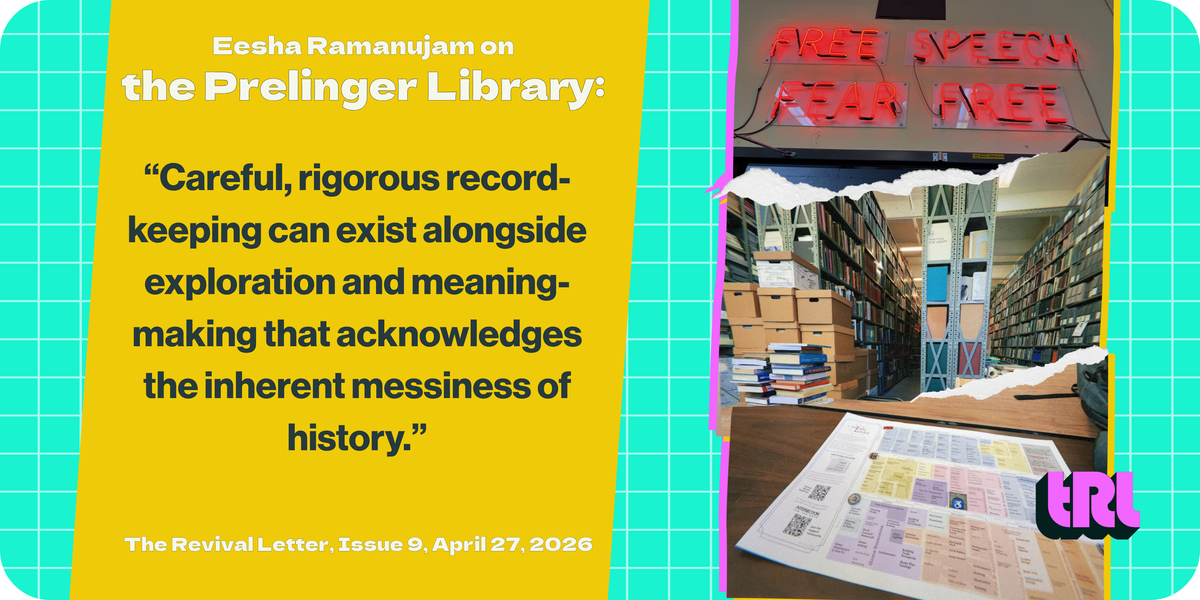
A few weeks ago, I was on a research trip to the Bay Area when I realized that the Prelinger Library, which I’d recently learned about in my classes, was close by and available for a visit. I was in the area just long enough to drop in for a few hours during one of its Sunday open houses.
Walking through the doorway, I was handed a map and immediately asked by a staff member and then co-founder Rick Prelinger himself what I was looking for, and what had brought me to the library. I was offered a beverage, as well as the option to just explore if I wasn’t in pursuit of anything specific. A few staff members were scanning pages and chatting about their new acquisitions, sharing some of their favorite items with some other open house guests at the tables in the front. Rick quickly identified a few periodicals relevant to my research, showed me where they sat on the shelves, directed me to a rolling stepladder I could use if I needed, and wished me good luck, offering further options and follow-up if I made my way through the ones he’d already suggested. I got to work.
Over the past few months, I’ve become more and more familiar with scanning library shelves with different classification systems and requesting stored materials from archival collections based on finding guides. But as I stepped into the Prelinger Library, it was clear that the rules I’d encountered before didn’t apply here. In the heart of Silicon Valley there exists a space that defies the parameters that tech platforms and CEOs would set for the availability and organization of information. This library has adopted the openness of digitization while preserving the sanctity of original material. It resists the simplification of automated selection and embraces the messiness of human creation. Stepping into the library is like entering a museum — not just because of the sheer volume of fascinating historical material at one’s fingertips, but because the Prelingers have clearly demonstrated how to approach archiving as an art.
Were you forwarded this newsletter? Subscribe today to get The Revival Letter directly in your inbox.
The Prelinger Library was founded in San Francisco in 2004 by Rick Prelinger and Megan Shaw Prelinger as an independent, private library open to the public, framed around the subjects and materials that most fascinated them from the 19th and 20th centuries. Megan Shaw Prelinger has framed it as existing in a space independent from institutions, distinct from that of the state, the city, and the university, though accessible to their community members. The organizational system, designed by Megan, is intended to facilitate “serendipity” for those who wander through the library’s shelves, different from the more precise encoding of the Dewey Decimal or Library of Congress systems. A “geo-spatial” mode of cataloguing, the Prelinger system is set up to resemble a “walk through the landscape of ideas.”
Megan told artist and critic Pierre Leguillon that the system “starts where the library resides, in San Francisco, and ‘walks’ from West to East through the American landscape. It continues through place-based subjects to a transition…from the tangible to the mediated, where architecture becomes design and art. The organizational system continues to progress from concrete to abstract, from tangible to theorized, all the way to the end in [outer] space. Every step, every bank, is a discrete step in this organizational system.”
This way of approaching their materials drew inspiration from Warburg’s “law of the good neighbour.” Usually, institutionally-affiliated special collections and archives strictly define their guidelines for inclusion or exclusion of materials. They must separate different categories of materials based on sources or medium in predetermined ways. The Prelinger Library, on the other hand, is free to collect, curate, and combine different types of printed materials in the same section or subject area that visitors may not even have thought to consult, but that might illuminate new ways of looking at landscapes, media, art, or any variety of subjects. Government documents, periodicals, trade publications, guidebooks, monographs, fiction, and a host of other items all can (and do) occupy the same shelves, reaching from the work area at the front of the space almost all the way to the back windows. Flush with that back wall are several shelves sporting hundreds of gray archival boxes that hold their collection of ephemera — loose paper and unbound documents that cannot be stacked in their shelves — also organized in these serendipitous ways (though requiring staff assistance to explore). The organization of the bookstacks in the Prelinger Library is far from merely nominal or vague in the name of encouraging exploration; the intention is to create an immersive experience in which you can still find what you are looking for.
The library’s team as well as its public-facing events brim with enthusiasm not just to help researchers with their aims but to provide a lane for anyone to explore their curiosity. The meaning of the library is created, as the co-founders have said before, through interaction. Materials enter and leave the library through the community built around it, expanding and shrinking the collection on an ongoing basis. Beyond the open house days, the library offers researcher fellowships and residency opportunities with the primary intent of making the materials as accessible as possible to those who might make use of it for their scholarship, art, or other pursuits. Resources and cards, both directly related to the library and advertising other community initiatives, cover a table in front. A guest book sits prominently near the doors, and I am encouraged to fill it out before I leave. Over the door hangs a piece by artist Vanessa Renwick, with the words “Free Speech / Fear Free” in neon.
The physical space was not quite filled with the silent calm of a public library, nor the sterile, controlled environment I’d come to expect from archival reading rooms where I could page through rare materials. In fact, in addition to the consistent hum of conversation from the workspace in front, this Sunday open house featured the usual sound “instrullation” by Artist-in-Residence Thom Blum. I barely clocked it at first, as I started poking through the books on the particular shelf that had been pointed out to me. The soundscape playing over the speakers blended into the background at times, then became more noticeable, interspersing the hushed noises of shuffling hardcovers along a shelf or rustling pages with quiet passages being read aloud.
The library itself is just one element of the greater Prelinger Archives, which were originally founded in 1982 as a collection of “ephemeral films” (sometimes referred to as “useful films”). These films were created by amateurs or sponsored by corporations or organizations to fulfill a particular purpose at a particular time. Rarely prioritized by any archiving efforts, and often surviving primarily by chance, the films, according to Rick Prelinger, are important artifacts of visual, corporate, and local culture from the times.
The thousands of physical film reels comprising the archives were donated to the Library of Congress in 2002, with a few subsequent donations as well. A significant portion of those films are now in the public domain, and about 10,000 have been digitized and uploaded to the Internet Archive, for which Rick is a board member. Many of those films are outlined in The Field Guide to Sponsored Films, commissioned by the National Film Preservation Foundation in 2006, accompanied by interesting historical context and connections to other work.
When asked about their attitude towards paper or other physical materials in an increasingly digitized age, the Prelingers point to the dual nature of their own archives as a contradiction to a linear narrative of digitization. As Megan Shaw Prelinger has said, “the library project is an experiment in collapsing some of the working dualities between analog and digital modes of access.” People often come to the library after first accessing the digital archives. While perusal of the Internet Archive-hosted video collection is more query-based, there are significantly more materials and opportunities for exploration in the physical library. Plenty of people seek out the allure of physical materials as a direct result of the normalization of exclusively digital searches, celebrating the tactile element of paging through real papers and books. The creative tension between the two, as Megan has highlighted, can lead to different results. The digital archives and the preserved collections complement each other rather than compete.
Rick Prelinger has written about “archives of inconvenience” as a contribution to broader conversations about archival theory. Archival film presents the opportunity to bring other types of stakeholders beyond archivists, collectors, or academics directly into the process of production (see our previous Revival Letter issue on the South Side Home Movie Project). Focusing on films that are traditionally disregarded by more traditional institutionally-affiliated collections might be messier or “inconvenient,” but it forces direct engagement with the material rather than compartmentalizing it within existing regimented or obscured workflows and categories. And that direct engagement, while it might seem more difficult, allows for a more critical reading of the content itself, illuminating the uncertainties of its origins and creating new relationships to what it depicts. Prelinger has specifically cited home movies and personal records as emblematic of this challenge and its potential, calling them “highly granular, typically uncharismatic, eminently unselectable, frequently unreleasable, effectively infinite, extremely inconvenient.” With all these contradictions, he also tweeted in 2012 a list of 21 reasons why home movies are important, including #18: “They show us so eloquently what we must celebrate and what we must leave behind.” They reflect the ambiguity of history and remembrance.
The approach of the Prelinger Archives and Library focuses on meaning, attention, and imagination. Traditional and simplified conventions of history as a discipline have often dictated that archivists collect, and historians make meaning. But such an approach belies the importance and power of the incentives and goals that dictate what is collected, how it is organized, and how it is made available to people. The Prelinger Library is an example of how careful, rigorous record-keeping can exist alongside exploration and meaning-making that acknowledges the inherent messiness of history. Overnarrativization is how dominant, powerful, single stories take hold of the public imagination; the choice to direct attention to artifacts or cases that complicate existing understanding is an important tool to resist that tendency toward reductiveness. Searching for outliers and foregrounding them, as Rick suggests, can be far more illuminating than attempting to find simple narratives to compartmentalize history. Such an approach is compatible with and, indeed, happening alongside ongoing efforts to intentionally preserve, surface, and amplify “underrepresented narratives and records that have been suppressed by force and violence.”
The Prelinger Library’s status as a private-yet-public space is a notable one, and exists as part of a broader network of archivists and historians pursuing important goals of preservation, discovery, scholarship, and art. The Library and Archives, even the digitized aspects, reflect an awareness of archival as a social practice, not merely an intellectual one. While Rick has clarified that their work is supplemental to and supportive of community archives, the library is not in itself a community archive, which would be arranged and collected by and for a particular community group (he has cited Chicana por mi Raza as one such example). Especially in a time when institutions are losing and reallocating funding away from the social sciences, humanities, and historical work in particular, a different future of independently- or community-led archives has become increasingly and urgently important to imagine and resource. As Rick Prelinger writes in “Archives of Inconvenience”: “Most cultural repositories lack strong advocates, and we must step in to help defend their independence and ensure their persistence. We must find a way to thematize archives simultaneously in two realms: as players in unpredictably evolving media ecosystems, and as entities that stand apart from the voracious present and offer at least a fair shot at historical accountability.”
###
Eesha Ramanujam is a Project Advisor at the Revival Lab and a media and tech accountability researcher, currently completing a Masters in Social Sciences at the University of Chicago.
Selected sources & additional reading:
- Prelinger Library website: Stacks Explorer, Organization & Contents
- Prelinger, Rick. “Archives of Inconvenience.” In Archives. University of Minnesota Press: 2019. https://mediarep.org/server/api/core/bitstreams/08dea680-7e16-4059-9c69-9ad3a3a54a72/content.
- Prelinger, Rick. “The Field Guide to Sponsored Films.” National Film Preservation Foundation: 2006. https://www.filmpreservation.org/userfiles/image/PDFs/sponsored-2018-8-14.pdf.
- Leguillon, Pierre, and Prelinger, Megan. “On Libraries in the Age of Dematerialization: Pierre Leguillon in conversation with Megan Prelinger.” In The Archive as a Productive Space of Conflict. Edited by Markus Miessen, Yann Chateigné, with Dagmar Füchtjohann, Johanna Hoth, and Laurent Schmid. Sternberg Press: 2016.
- Vonderau, Patrick, and Rick Prelinger. “Vernacular Archiving An Interview with Rick Prelinger.” Films That Work: Industrial Film and the Productivity of Media. Edited by Vinzenz Hediger and Patrick Vonderau. Amsterdam University Press: 2009.
- Kissane, Erin, Megan Shaw Prelinger, and Rick Prelinger. “The library as map: Megan Shaw Prelinger & Rick Prelinger in conversation with Erin Kissane.” In Fantasies of the Library. Edited by Anna-Sophie Springer and Etienne Turpin. MIT Press: 2016.
- Prelinger, Megan Shaw. Another Science Fiction: Advertising the Space Race 1957-1962. Blast Books: 2010.

Compiled by David Dexter
This week we’ll do something a little different with the Bulletin Board. It will serve as a dispatch for some of what I learned at the incredible Take Back Tech conference hosted last week in Atlanta by MediaJustice and Mijente. Each workshop section had 12 amazing options, so this isn’t close to an exhaustive list, but it is what I was able to gather.
Tech and the Affordability Crisis
- The Harbor Institute for Immigrant and Economic Justice and Economic Security CA Action — These two organizations hosted a great workshop on how a lack of affordability is driven by two things: 1) Broken markets – a handful of companies consolidating power and 2) Broken incomes – the majority of people not earning enough money. Follow their work.
- Consumer Reports — They discussed their investigation, along with Groundwork Collaborative and More Perfect Union, that showed how Instacart’s surveillance pricing scheme charged people different prices for the same goods.
Data Center Organizing
- Communities around the country — and the world — are organizing against the extractive desires of big tech. These fights energized the whole event, and you can find out more about their great work by following these efforts. (not exhaustive, sorry!)
- MediaJustice, Free Press, People’s Tech Project, Alliance for Affordable Energy in Louisiana, Memphis Communities Against Pollution, Renew DeKalb in Georgia, and Movimiento Socioambiental Comunitario por el Agua y el Territorio (MOSACAT) in Chile.
Workers Organizing Against AI/Automation
- Distributed AI Research Institute and Carnegie Mellon University — This workshop highlighted how workers are resisting the forced use of AI in their workplaces. They previewed an exciting new resource hub from DAIR that should be launching next month. Stay tuned.
Upcoming Books
- End Times Fascism and the Fight for the Living World, by Naomi Klein and Astra Taylor, September 2026
- Klein kicked off the event with a preview of this book, which looks at how data centers, deportations, Gaza, and AI are all part of the same ideological project, and how we can fight back.
- The Nerd Reich: Silicon Valley Fascism and the War on Democracy, by Gil Duran, August 2026
- Duran spoke on a panel on the second day and previewed his book, which looks at the The Sovereign Individual and its influence on Peter Thiel, as well as how tech oligarchs are building a future where they become godlike and the rest of the world is left behind.

The Revival Lab envisions digital spaces as extensions of the connections we build in real life, rather than as poor substitutions. We hope you see this recurring segment as us rummaging through the shelves under the TV or leafing through a CD case to hand you what we’re watching or listening to.
Selected by Eesha
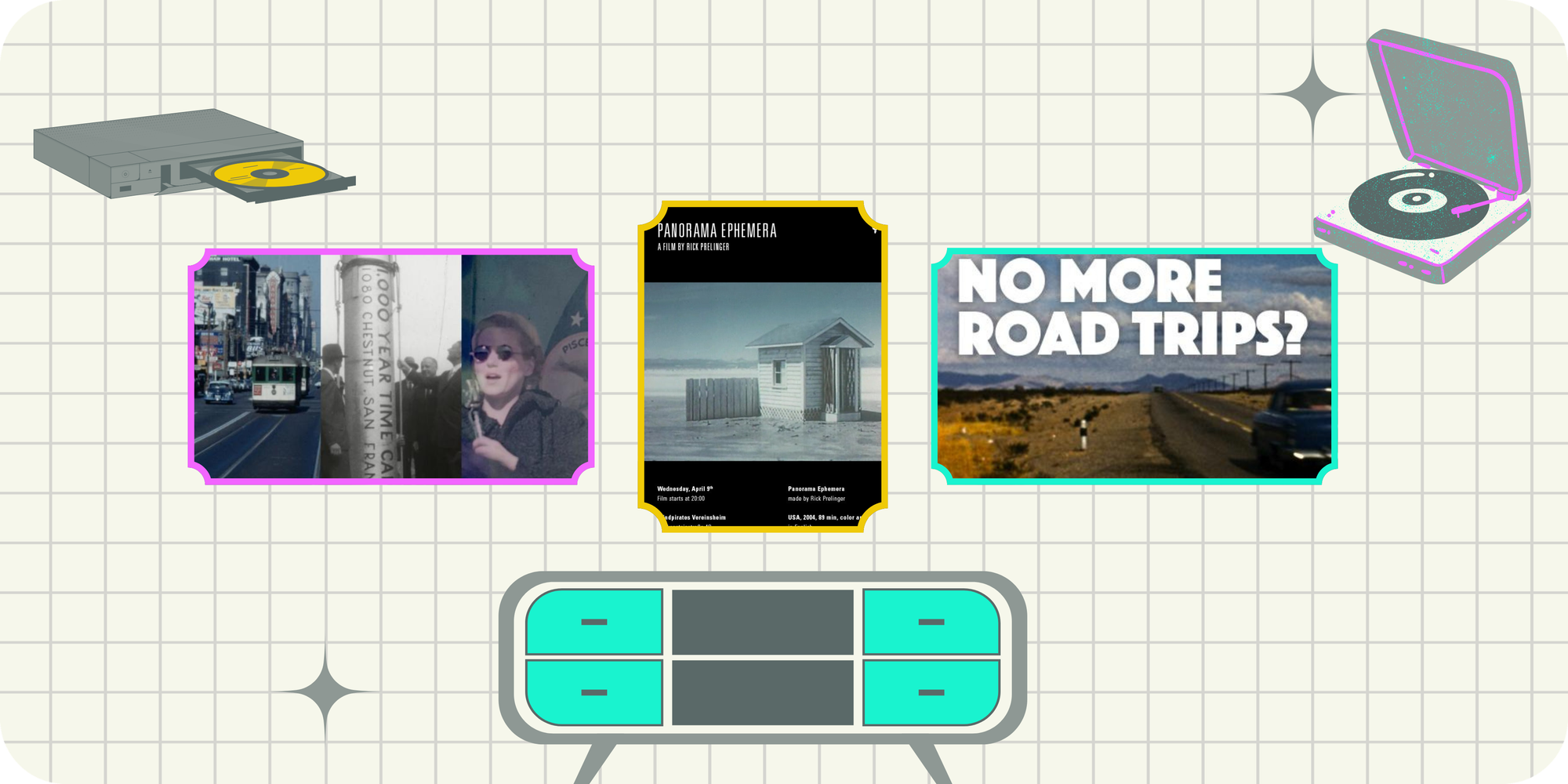
Rick Prelinger has made several archival assembly-like documentaries that demonstrate his call to avoid convenient narratives and surface underseen or “lost” footage. They often lack a soundtrack or omniscient narration outside of the native sound from the film selections themselves (if they have any). His films, reflecting a similar organizational and collection logic to the library, place clips from corporate- and institutionally-funded films alongside amateur media like home movies. His screenings encourage audiences to “make their own soundtrack” — identify familiar places and people, ask questions, discuss with their neighbors, and “generally act like vocal sports spectators or the rowdies in the pit in front of the Elizabethan stage.” Please feel free to do the same with these selections of his work!
- Panorama Ephemera: This film, Prelinger’s first, has gone through many iterations, though he still considers it his best work. It includes clips from industrial, advertising, educational, and amateur films, and even the credits prompted questions from the audience with which I watched it. Truly felt like a time capsule from the mid-twentieth century.
- Lost Landscapes of San Francisco: The Lost Landscapes series, which began with an annual screening in San Francisco, draws from hundreds of archival films to show urban and natural landscapes in particular cities.
- No More Road Trips?: This assembly made from over 9,000 home movies moves from east coast to west coast, showing a variety of landscapes in the US and encouraging discussion about the past, present, and future of travel.

- The Internet's Most Powerful Archiving Tool Is in Peril — Kate Knibbs, WIRED, April 13, 2026
This article reports on a troubling trend of outlets and platforms restricting their web pages from being archived on the Internet Archive’s Wayback Machine, an integral tool for research, legal evidence, and journalism. The analysis includes concerns about AI model training and scraping, as well as the history of the Internet Archive’s legal battles. … Recommended by Eesha
- Big Tech Cash for Backlash: How Silicon Valley Philanthropy Undermines Rights Worldwide — Noor and the Institute for Journalism and Social Change, April 2026
This report tracks the money and looks at how philanthropic dollars are flowing out of Silicon Valley to support fascist and fundamentalist ideals around the world. (Noor is a feminist organization building the power of gender justice. Donate to Noor. The IJSC seeks to reinvigorate media to support democracy. Donate to IJSC.) … Recommended by David
- We Will Not Be Erased: Queer Archives, Trans Histories (event recording) — Tourmaline and Steven Watson, Barnard Center for Research on Women, April 8, 2026
Cultural historian Steven Watson discusses the launch of his Artifacts collection, including archival footage, interviews, and firsthand accounts from important figures in queer history and the arts. Watson is in conversation with artist, writer, and activist Tourmaline, whose biography on Marsha P. Johnson drew from the Artifacts project. (Barnard Center for Research on Women is a center for feminist research and programming. Donate to BCRW. Artifacts is a nonprofit preserving and sharing the history of avant-garde, queer, and underground movements. Donate to Artifacts.) … Recommended by Eesha
- AI Data Centers: Big Tech's Impact on Electric Bills, Water, and More — Nicole Greenfield, Consumer Reports, March 20, 2026
This report and its accompanying data visualizations highlight the sheer scale and stakes of data center expansion, including water consumption, utility prices, construction dangers, and other health and environmental impacts. The article also includes cases of community residents and consumer advocates halting data center construction or pushing for regulation. (Consumer Reports is an independent nonprofit membership organization working alongside consumers for truth and transparency in the marketplace. Join Consumer Reports.) … Recommended by Eesha
- ‘Everyone is Replaceable’: Death Rattles Oregon Amazon Facility — Ryan Haas, The Western Edge, April 13, 2026
In a harrowing story that went unreported by major media outlets, journalist Ryan Haas tells of how Amazon workers were told to get back to work while their colleague’s lifeless body laid on the floor near them. Since Haas’s report, there has been increased heat on Amazon, showing that independent, investigative journalism can still break through tech’s control of the media. (The Western Edge is a newsletter covering the Pacific Northwest. Subscribe to The Western Edge.) … Recommended by David