
Beyond Mental Health Month: We Are Not Solo Projects
Don’t forget to drink water! You really should be walking 10,000 steps a day. Are you eating fruits and vegetables? Don’t eat too much red meat.
How is your mental health?
*Record stops.*
This year marks the 77th Mental Health Awareness Month. In the past, primarily those who either worked in mental health or had their own personal, direct experience with mental health knew that May = Mental Health Month. Now, there are mental health think pieces, personal stories, promotions, ads, and posts, all reminding us to take care of ourselves. Due in part to the collective trauma of a global pandemic, ongoing hyper-focused racialized violence, and deep uncertainty about the future, people started to think, “Maybe we should check in on our mental health.”
This development is welcome, but complicated.
Were you forwarded this newsletter? Subscribe today to get The Revival Letter directly in your inbox.
On the plus side, the stigma surrounding mental health is shifting. People are slowly opening up about deeply hidden experiences and seeking support and care. More people are being mindful of their language. Interrupting cycles of generational trauma is a hot topic, especially among new parents trying to move away from their own childhood experiences of corporal punishment (e.g., gentle parenting). More people are engaging in self-inquiry about their relationships with substances and food, determining what works and what doesn’t work for them. Harm reduction has entered the chat to help add nuance to the fact that coping looks different for different folks. The patchwork quilt of possibilities for healing as a collective feels within grasp, and yet…
The more mainstream acceptance of mental health also means that the version of it that is discussed and uplifted is the illness-focused, biomedical model, and Westernized perspective. Simply stated, mental health is seen as an individualistic challenge that needs to be eradicated by treatment. This doesn’t take into account history, generational trauma, culture, racial-ethnic background, or spirituality.
If mental health is an issue, capitalism is ready to sell you a solution—whether it is the newest medication with a long list of side effects, a brand new therapeutic regimen for your obscure diagnosis, mindfulness retreats, tech companies swiftly connecting you with a therapist day or night, an online test to diagnose yourself with ADHD (look, we can’t all have it), the specific checklist/protocol/organizer tool that you need, apple cider vinegar, or a theoretical 10-part documentary series on how to identify if your partner is a narcissist, complete with a workbook journal. Some or all of these might be solutions that fit someone's needs. But they won't solve the problems often created by the same entities that market or sell them. Mental health is commodified, packaged, and sold like any capitalistic creation of the U.S.
Somehow, this "mental health conversation" is completely out of touch with what so many people are dealing with and struggling against: heightened distress, economic despair, the expeditious removal of human rights, and increased attacks and surveillance on poor and working-class communities. The discourse exists apart from people’s realities. In fact, some studies echo what many mental health advocates and professionals have shouted from the rooftops for years: giving people money is more effective for mental health than brief therapy (e.g., The Kenya Cash Study). We need to have a real conversation about mental health that isn’t about pedicures and wellness.
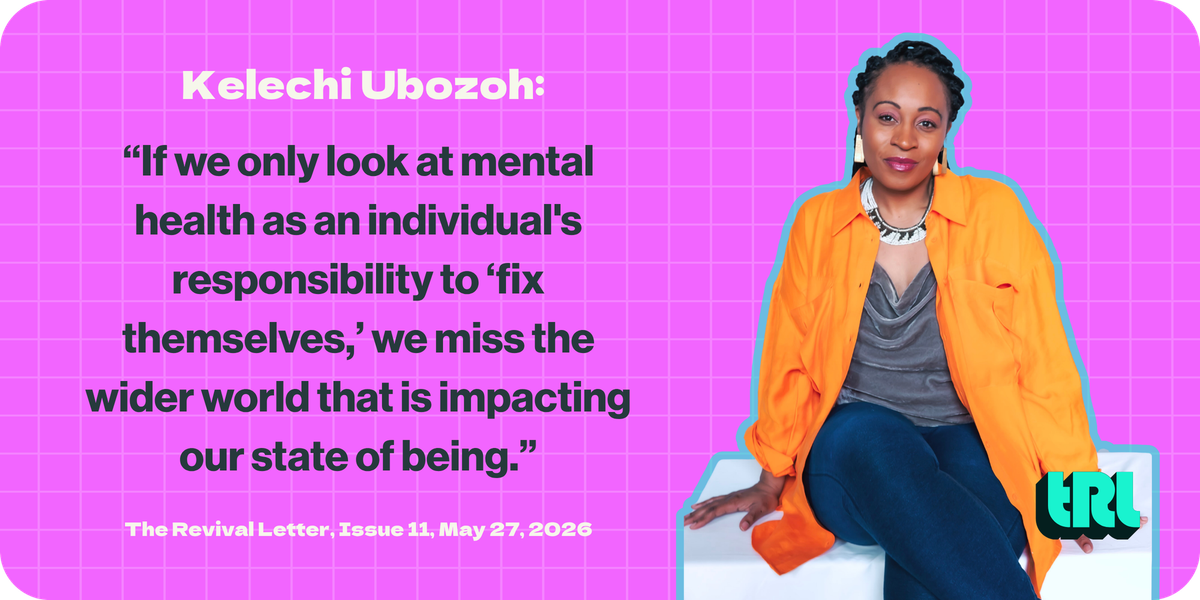
The truth is, if we only look at mental health as an individual's responsibility to "fix themselves," we miss the wider world that is impacting our state of being. How does losing our reproductive rights affect our mental health? What about our voting rights? If we know that racism negatively impacts people’s mental health, how does someone address that on an individual basis? Gas prices are rising, people are worrying about how to pay the next bill, and yet we need to dive deeper and work harder on ourselves?
Our mental health is impacted by the world around us—by our neighbors being imprisoned, by our loved ones losing jobs and homes, by being displaced, and by the criminalization of our communities.
It is imperative that we move from this solely individualistic approach to mental health to one of caring for the collective—and we are part of the collective. Collective care can look like asking a friend to bring groceries and medicine when you’re sick, sitting with someone and making space for their deepest heartache, celebrating children as they accomplish a milestone, or cleaning a loved one's home while they mourn the loss of their partner.
Hopelessness, numbness, overwhelm, and dissociation can be interrupted by action and connection. Advocacy done in community can bolster our mental health. Caring for each other can support our mental health. Interrupting isolation and connecting with nature, art, and sunlight can improve our mental health.
Ultimately, we have to ask ourselves: What does creating a life worth living look like? For some, it is purchasing land together with chosen family and sharing expenses, hardships, and joy. For others, it is honoring lineages and rituals from ancestors about deep care. For others, it is staying in the fight to work to restore our liberties and end the violent infractions we are enduring. Collective care is a lot of things, but most importantly, it is resisting isolation.
We need to take care of ourselves, absolutely—but to act as if we can treat ourselves as a solo project while the world falls apart around us and believe that we won’t be impacted is actually wild. Knowing that the catastrophic harm we have endured may not be undone in our lifetime makes it imperative to zoom out and think about how we care for future generations.
As the brilliant Causha Spellman-Timmons says, “We are ancestors in training.”
Taking care of the world around us means fighting for each other. That is what collective mental health looks like.
What does it mean to you to create a life worth living? What kind of ancestor do you want to be?
###
Kelechi Ubozoh is a Nigerian-American writer, mental health advocate, space holder, and coach. A former investigative reporter and the first student published in The New York Times, she now centers lived experience through advocacy and art. Learn more at kelechiubozoh.com.

This section is an opportunity to share some of The Revival Lab founder Brandi Collins-Dexter’s writings, published and unpublished, as well as reflections from those who worked with and learned from her. Today, we have a reflection from Brandi’s dear friend, Kelechi Ubozoh.
There is so much to say about Brandi Collins-Dexter, and I will continue to write about her as an ongoing practice. She was brilliant, courageous, and so very wise. She is remembered for her labor, advocacy, and foresight, but more than what she offered, I miss her presence and being silly together. Her invitation to be your authentic self was such a gift. I miss my friend, and I think about her every time I hear one of our favorite alternative rock songs or watch The Vampire Diaries. The last time I saw her, a few months before her death, we were sitting on her stoop in Baltimore. She was pondering what more she could do for the movement, and I read this to her in response.
Octavia Told Me…
By Kelechi Ubozoh
Dedicated to my beautiful friend, Brandi Collins-Dexter (1980-2025): writer, researcher, and civil rights activist, who is finally resting.
In the future
There is a wild garden of blooming orchards, lilies and marigolds
Plush soft green grass and weeping willows bent from the past
Unforbidden apples with flowing knowledge
The land has healed itself
And Black women are resting
In the future
We are in right relationship with the land and all her stewards
We dig, unearth, root, get grounded, plant, eat and repeat
Food is abundant
Seasoned, buttery, and warm
More than enough
All the bellies are fed
And Black women are resting
In the future
There are homes, not just houses but places that are sacred beyond four walls
Created with divine designers
Accommodating all bodies and disabilities
Carefully crafted with love, you can pick whatever you want
Victorian? Art Deco? Redwood Treehouse? Cottage? Spaceship?
Whatever you dream can be realized
Everyone is housed to fit their needs
There is always enough
And Black women are resting
In the future
A cure for hatred was discovered by children
Through their sweet wise council
Everyone is allowed a range of feelings and emotions
Accountability is no longer designated to the ones who are overly responsible
With hatred removed
Conflict is solved through communication and community
And Black women are resting
Past, present and future collide
Old timelines crash
Prophecies are unmasked
As this world crumbles
The new world emerges
All the while Black women are resting
In the future
Black women are resting
Black women are playing
Black women are seen
Black women are celebrated
Black women are loved
Black women are receiving
Black women are dancing
Black women are blooming
Poem also published in The Amistad.

- Comunicadores Keep Their Communities Safer — Vanessa Maria Graber, Pressing Issues, March 5, 2026
Spanish-speaking journalists are on the frontlines of Trump’s violently racist immigration crackdown. Read about how our friends at Free Press have supported Philly’s Spanish-speaking journalists and the communities they serve through their Comunicadores program. (Pressing Issues is a newsletter published by Free Press, a national media advocacy organization. Donate to Free Press) … Recommended by David
- The World Is Already Resisting AI. Now, There is a List to Prove It. — Petra Molnar, Tech Policy Press, May 21, 2026
This article covers the context and launch of the AI Resist List, a collaborative effort to track mobilization against the extractive tech economy and defiance of AI’s supposed inevitability. Molnar provides a great introduction and framing for this project, highlighting the different parts of the supply chain at which resistance is happening. (Tech Policy Press is a nonprofit media and community venture covering technology and democracy. Donate to Tech Policy Press.) … Recommended by Eesha
- Local News Fact Sheet — Pew-Knight Initiative, Pew Research Center, April 14, 2026
This resource concisely synthesizes almost a decade’s worth of data on Americans’ local news experiences and preferences, as gathered from Pew surveys. Some of the findings provide a useful grounding (and sometimes contradiction) to anecdotal observation about media habits, and also set up a useful frame to discuss the relationship of audience behavior with divestment from local news. … Recommended by Eesha
- Luddite Lab Worker Resource Hub — DAIR, May 2026
Launched in the last two weeks by our friends at DAIR, the Luddite Lab Resource Hub is a place where workers, union leaders, researchers, and others can find resources to fight automation and AI at work. (The Distributed AI Research Institute is an independent organization conducting community-rooted research in service of the belief that technology should benefit everyone. Donate to DAIR) … Recommended by David

The Revival Lab envisions digital spaces as extensions of the connections we build in real life, rather than as poor substitutions. We hope you see this recurring segment as us rummaging through the shelves under the TV or leafing through a CD case to hand you what we’re watching or listening to.
Selected by Eesha
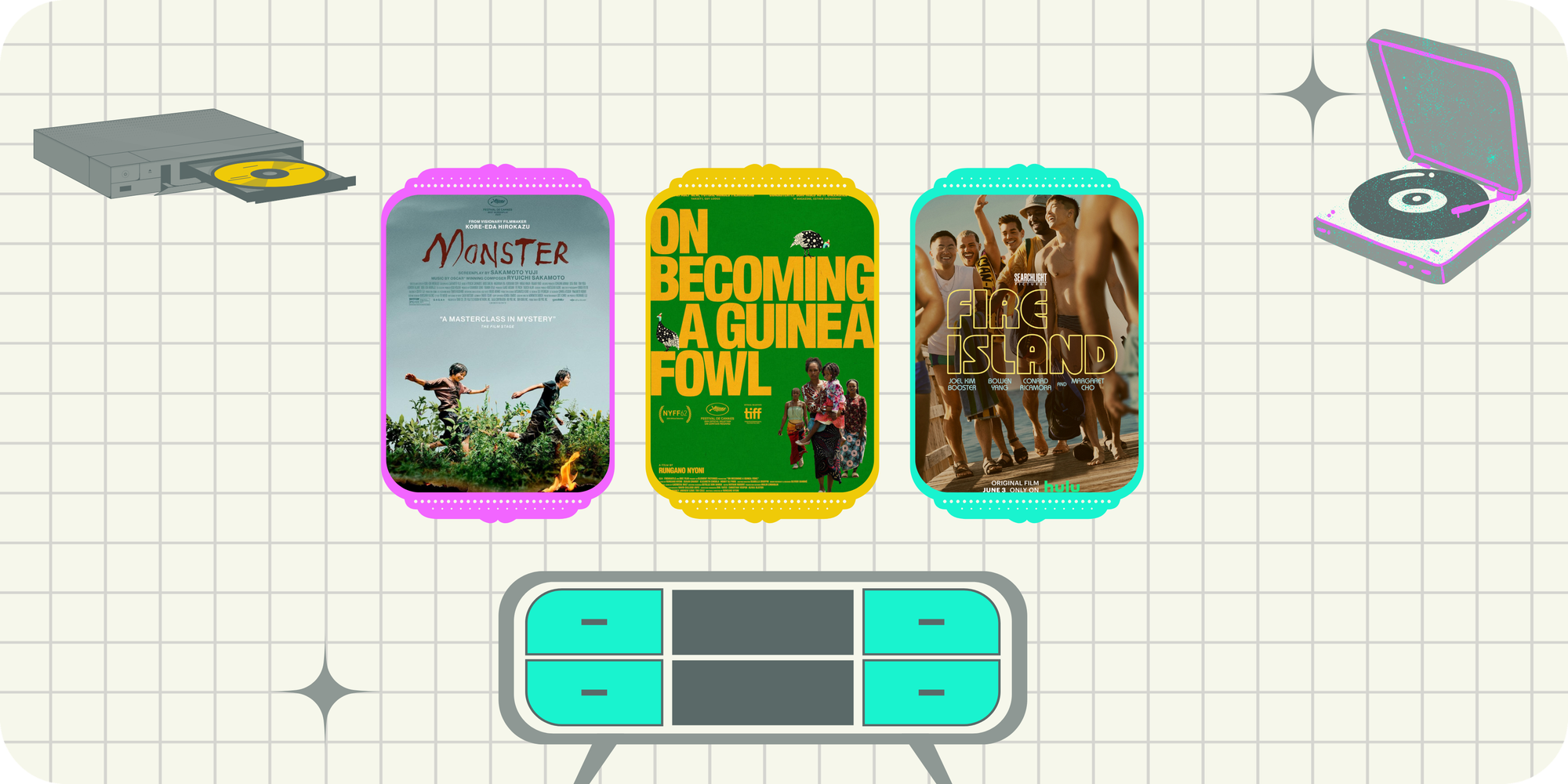
Today’s media cabinet includes a few recent films across genres that deal with community and isolation in very different ways. Check out our list and brief descriptions below!
- On Becoming a Guinea Fowl (2024): Rungano Nyoni’s absurdist dark comedy drama begins with a death that unearths a Zambian family’s submerged histories of abuse. A combination of dramatic, almost-surreal imagery and bare, confrontational reality, this movie navigates grief, family ties, gender roles, and trauma in remarkable, frequently funny ways. (Rated PG-13)
- Monster (2023): This mystery drama is best enjoyed with as little prior information as possible. Director Hirokazu Kore-eda crafts an emotional story about a mother noticing something amiss with her son and approaching his teacher to discuss it. (Rated PG-13)
- Fire Island (2022): A modern take on Jane Austen’s Pride and Prejudice, this queer romantic comedy set on the eponymous island is a hilarious and warm exploration of many kinds of love, including that of friends, chosen family, and occasionally reluctant community. (Rated R)

DocFest: Lost Landscapes of San Francisco 20 with Rick Prelinger (in-person, Bay Area) - Friday, May 29, 2026
Previously mentioned in our issue on the Prelinger Library, the Lost Landscapes live cinema event series returns with a screening at the Roxie Theater as part of the 25th San Francisco Documentary Festival! If you’re local, check out this participatory urban history project with footage from 128 years of SF history, designed to be reacted to and interacted with by the audience as it plays.
The World Cup is nearly here. Experience it together with this engaging new organizing tool that is designed to “make sure this moment belongs to the people — the fans, the families, and the communities who make the game beautiful.”