
On Balloons and Bots
By David Dexter
My most vivid early memory is of an orange balloon.
It was June, 1986. I was three years old. My parents had taken me and my baby sister to the grand opening of the DC Metro’s East Falls Church station on the Orange Line. There were orange balloons. I got one. It was all I ever wanted.
Moments later, a gust of wind came and — to my immediate panic — the string slipped out of my small fingers. I howled in terror as my beautiful balloon soared up out of my reach. I remember watching it until it was just the smallest speck in the sky.
I’d never see that balloon again. From a toddler’s perspective, this was the worst thing that had ever happened to me.
Were you forwarded this newsletter? Subscribe today to get The Revival Letter directly in your inbox.
Nearly four decades later and roughly forty miles away, I was again staring up at the perfect blue June sky. It was the day Brandi floated away. I bypassed the fit this time, and instead just sat on my stoop watching the clouds, still with the wide-eyed fear and bewilderment of a child. She was all I had ever wanted. And now I’d never see her again. It was the ultimate loss. What do I do now?
I learned quickly that when you’re an adult, there’s a lot you have to do. Paperwork. Phone calls. Everything else that comes when what was an incredible, vibrant life is somehow reduced to cold logistics.
It’s in those moments that the little things matter most. The retirement benefits folks mailed back a death certificate after scanning it in. The people on the phone at the life insurance company had endless kindness and patience as I asked the same questions again and again. The account rep at the bank recognized the vacant look on my face because he’d lost someone recently, too. I was barely holding it together. He told me I was doing a good job. It meant everything to me.
All of these acts had a few things in common. They all made things easier for me. And they were all the actions of human beings intuitively understanding the importance of the situation. They were also the actions of people in jobs that their bosses would gladly replace with AI if they could.
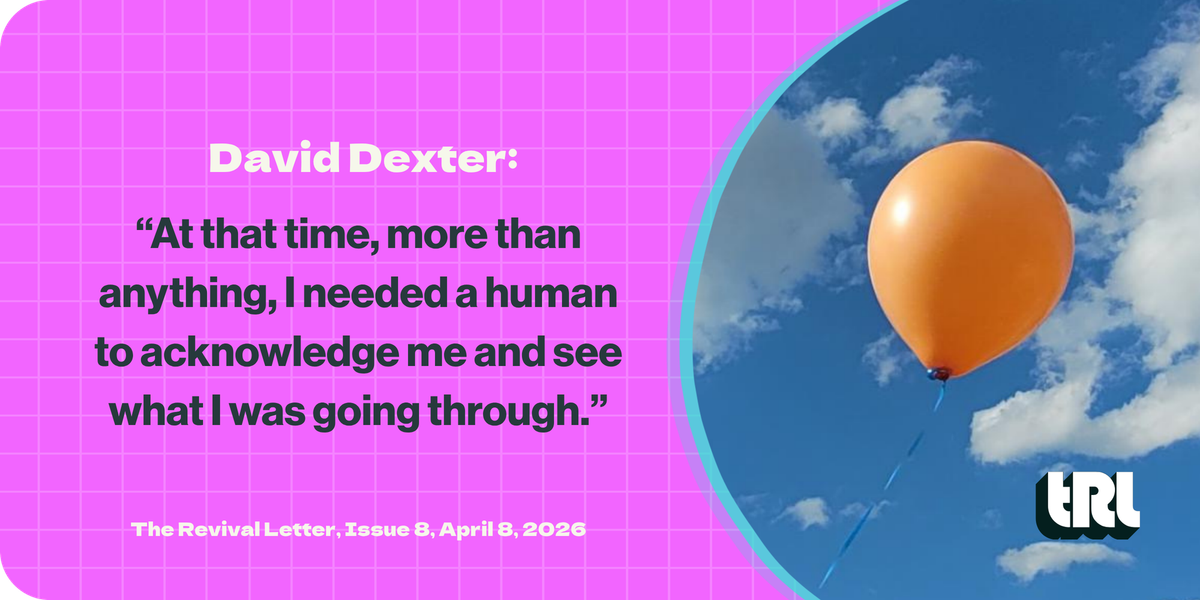
At that time, more than anything, I needed a human to acknowledge me and see what I was going through. I remember those little human interactions so fondly because of all the other times when they were notably absent. Because I also recall screaming obscenities at some robot repeatedly asking Brandi to verify her identity before it would even let me talk to a person.
Two weeks after Brandi died, an appeals court struck down the Federal Trade Commission’s “click-to-cancel” rule. The rule, which would have gone into effect on July 14, 2025, would have forced companies to make it just as easy to cancel a subscription as it was to sign up.
You don’t realize how much of your life is guided by subscriptions until you have to cancel dozens of them at once. I felt like a cryptologist trying to crack the world’s toughest code just to get them to stop sending me a fucking magazine. It was like I was living in a dystopian cyberpunk novel, but it was real and it was hell. I ended up having to just cancel the credit card being billed.
Each of those interactions with bots somehow made me feel even worse. But as time goes on, I remember less of that frustration, and instead I think about the humans who didn’t even know me but immediately understood what I was going through. The people who did what they could to help.
The good news is that there is a pathway to prevent others from going through such silly ordeals over subscriptions during the hardest times of their lives. “Click-to-cancel” isn’t dead, and consumer advocates like the Consumer Federation of America and the American Economic Liberties Project are still fighting to eliminate the “subscription traps” that lock us in and make it impossible to get out.
While I will always remember my first brush with irreversible loss — that balloon — there are better memories, too. For years after the Orange Line opened, my family and I would walk to the pedestrian bridge over I-66 so I could wave at the trains. When the conductors saw me, they’d honk the horn and wave back. I would jump around celebrating, a child’s boundless joy rekindled by a stranger’s simple acknowledgment. The little things are what matter most.
Getting through the loss of Brandi is a daily grind, and some days are better than others. But I know that there are all kinds of people out there who are looking out for me — as long as I can evade the bots to find them.
###
David Dexter is Project Director at The Revival Lab.
Sources and Further Reading
- “Trump’s FTC Let Lobbyists Kill Popular Click-To-Cancel Rule, Advocates Say, Jake Johnson, Truthout, July 9, 2025
- “‘Click to cancel’ bills in Congress target consumer subscriptions that are hard to ditch,” Sara Agostino, CNBC, January 27, 2026
- “CFA and AELP Submit Petition to FTC for Renewed Click to Cancel Rulemaking,” Consumer Federation of America and The American Economic Liberties Project, December 1, 2025
- “Consumer Watch: Click to Cancel,” The Late Show with Stephen Colbert, October 22, 2024

The Revival Lab envisions digital spaces as extensions of the connections we build in real life, rather than as poor substitutions. We hope you see this recurring segment as us rummaging through the shelves under the TV or leafing through a CD case to hand you what we’re watching or listening to.
Selected by Eesha
I’m writing more this week than I maybe ever have before, and I’ve been entirely reliant on a playlist of film scores to get into the right mindset. I was advised to turn to scores by writers and artists with varied musical preferences to facilitate their work: immersive, conjuring a scene, shaping your emotions, eliciting immediate reactions; steady, consistent, something to tap your feet to, maybe with an adventurous lilt to it; passive, almost ambient, just barely smoothing over the starkness of silence. Some people swear by classical music. Others need to be enveloped by intense electronic beats. Whether you seek gentle motivation or the looming presence of an impending deadline, hopefully these film soundtracks can get you started!
- Kris Bowers: Chevalier (ok, maybe a cheat with some of Saint-Georges’s compositions, but the combination with the original tracks is fantastic)
- Hans Zimmer: Interstellar
- Nicholas Britell: If Beale Street Could Talk
- Joe Hisaishi: Princess Mononoke
- Ludwig Göransson: Oppenheimer (Sinners felt too obvious, but of course that, too)
- Daniel Lopatin: Marty Supreme
- Atticus Ross & Trent Reznor: Challengers


This recurring section is designed to highlight some of the best critical work coming from a new generation of creators on YouTube fighting back against corruption and fascism. Left and progressive content creators, many of whom are young men, are speaking up and acting out in a popular front against the redpill manosphere, MAGA propaganda spox, and white nationalist trolls. Each issue, we’ll recommend an independent journalist or news influencer to follow to enhance your YouTube recommendations, and help signal-boost some of the best creatives who are speaking truth to power.
More Perfect Union: We Uncovered A Housing Scam Trapping Millions Of American Seniors
Non-profit investigative powerhouse More Perfect Union has only been around since 2021, but they've already established themselves as a pillar in the progressive media landscape. Their reporters travel the country, providing a megaphone for working-class people affected by the deadly confluence of corporate exploitation and political malfeasance. In this episode, Social Security-dependent residents of mobile communities struggle against the predatory private equity firms buying up low-income housing around the country. The MPU team highlights recent work by Florida Rep. Maxwell Frost, who introduced an act to protect these low-income and elderly residents against rent hikes, hostile eviction, and poor living conditions. It's this mix of on the ground reporting and a pragmatic approach to political and economic change that set MPU apart from both mainstream journalists and many of their drama-focused new media peers. Give MPU a follow to sage your timeline.
Brian Friedberg is a Project Advisor with The Revival Lab and a Senior Researcher at the Shorenstein Center on Media, Politics, and Public Policy at Harvard Kennedy School, a graduate student in Social Anthropology at Harvard University, and the coauthor of Meme Wars (2022).

- From the Ashes: How Grief Shapes Our Struggles (podcast) — Kelly Hayes, Movement Memos, October 24, 2024
In this episode, host Kelly Hayes and writer Sarah Jaffe discussed the ongoing labor of processing grief and identifying emotions as they surface in social movement work rather than attempting to dissociate or work through them. Their conversation yielded some powerful insights on loneliness, anger, and hope. (Truthout is a unionized nonprofit news organization reporting on social justice issues. Donate to Truthout.) … Recommended by Eesha
- The Job I Want Doesn’t Exist Anymore — Latria Graham, Scratch, March 24, 2026
All Latria Graham wants to do is write about art. She’s good at it, but the role of the cultural critic has evaporated. This is a beautiful yet sobering personal essay about a phenomenon many of us writers experience: Being anachronisms in our own time. (Scratch is a weekly newsletter by four self-employed writers. Subscribe to Scratch.) … Recommended by David
- Mariame Kaba: Everything Worthwhile Is Done With Other People — Eve Ewing, Adi Magazine, September 16, 2019
This interview from 2019 continues to provide a useful, grounded call to action: to center relationships and community in organizing as both essential and strategic. (Adi Magazine is a literary magazine dedicated to rehumanizing policy. Subscribe to the newsletter here.) … Recommended by Eesha
- Oakland and the Ghosts of Urbicide — Brandi T. Summers, Places Journal, March 2026
Oakland native Brandi T. Summers tells the story of her family’s history, the story of ordinary people living in an ordinary city. But the Oakland she remembers — that Black Oakland — no longer exists. It has been lost because “the logic of urbicide in the continuous rebuilding of cities necessitates the destruction of Black geographies.” (Places Journal harnesses public scholarship to cover architecture, landscape, and urbanism. Donate to Places.) … Recommended by David
- ‘A Teaching Tool for Safety, for Survival, for Justice': How Baltimore Artists are Using Zines to Organize — Jaisal Noor, Baltimore Beat, February 24, 2026
What’s old is new again as community organizers and local creatives have turned back to the tried and true method of self-published zines to spread information throughout their communities. Building off of Baltimore’s long history of Black print, one zine maker noted that the “renewed interest in zines feels less like a trend and more like a return towards human connection.” (Baltimore Beat is a nonprofit newsroom covering Baltimore City. Donate to Baltimore Beat.) … Recommended by David